Bear Mountain Milkweed
Asclepias scaposa Vail
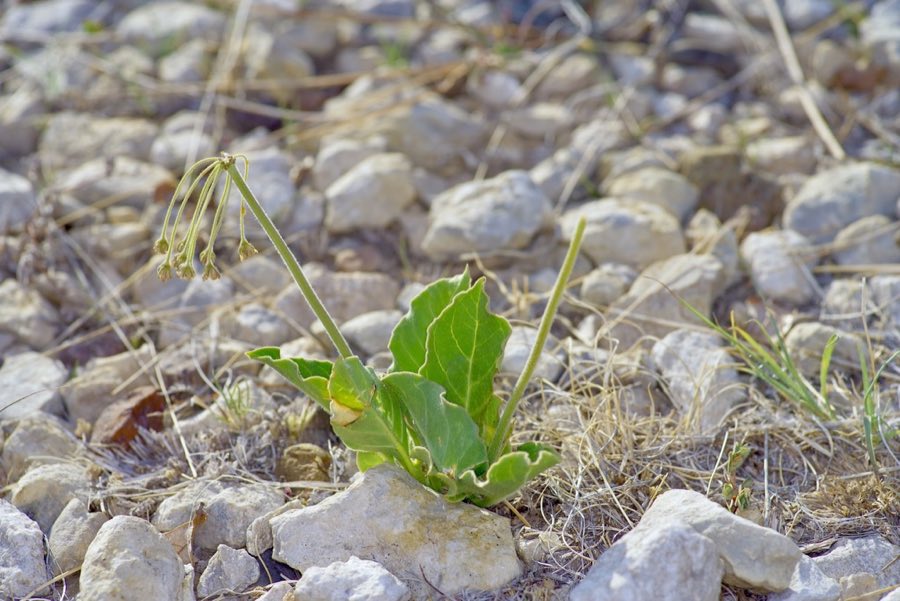
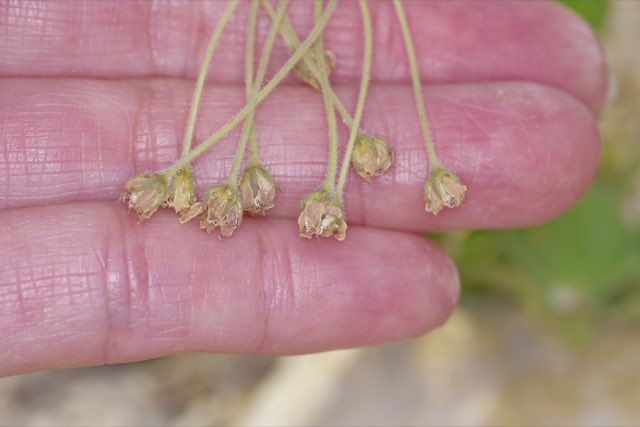
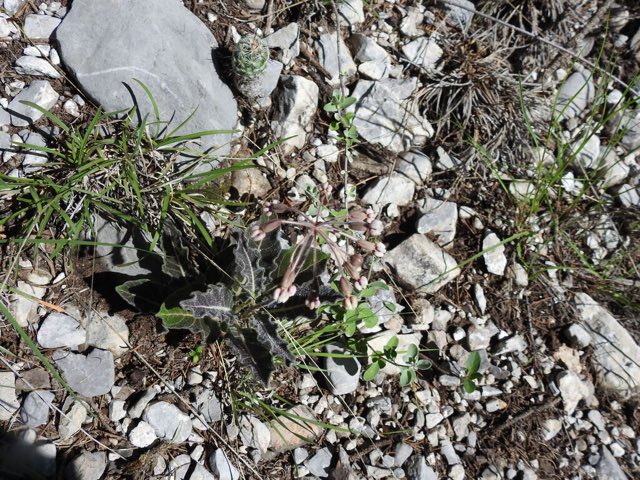
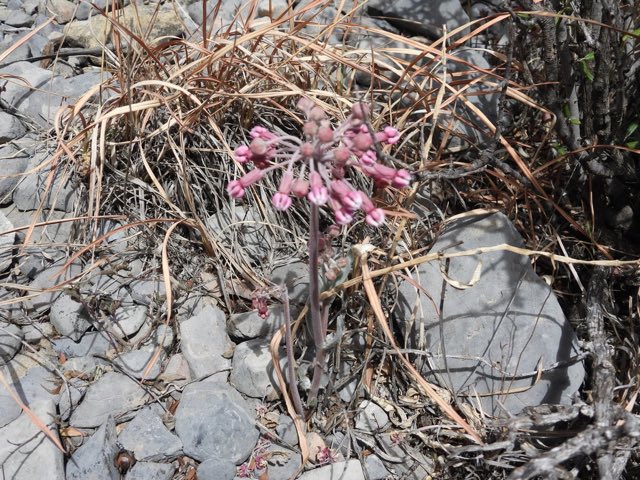
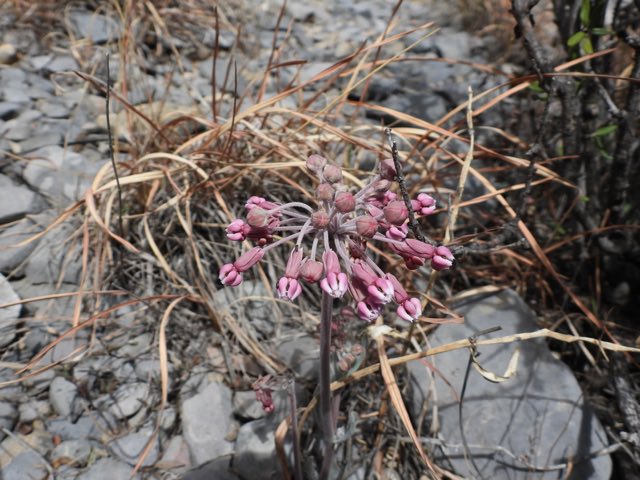
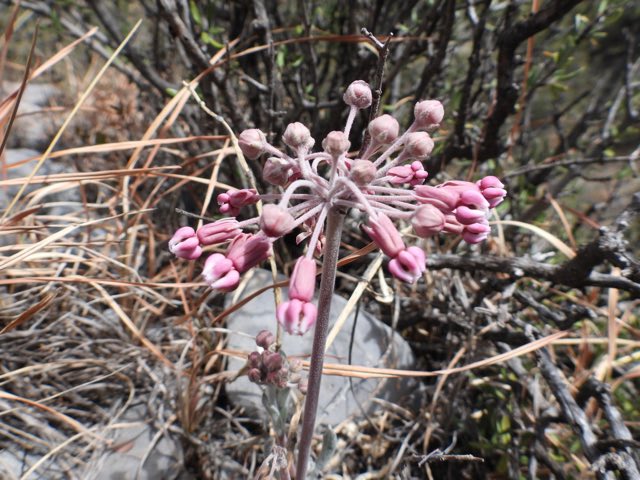
A very low west Texas milkweed of gravelly scrub-oak openings, no taller than a hand span, carrying a single long-stalked umbel of rose-purple flowers above broad clasping leaves. It flowers in early spring and is gone by midsummer.
Also called Stalked Milkweed.
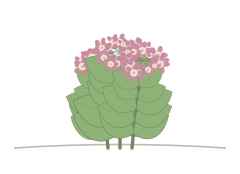
- Height
- 3 in–8 in
- Spread
- 6 in–1.2 ft
- Flowers
- rose, cream
- Bloom
- March to June
- Light
- Full sun
- Soil moisture
- Dry
- USDA zones
- 7–9
- Leaves
- Opposite, ovate
- Sap
- Milky latex
- Roots
- Deep taproot, resents transplanting
- Stratification
- 30 days cold-moist
- Range
- 1 state
When it flowers
Bear Mountain Milkweed blooms March to June, peaking in April and May.
How to identify it
- Tiny, to about 20 cm tall. One of a small group of milkweeds that never get above ankle height.
- A long bare flower stalk rising well clear of the foliage, which is what the name scaposa refers to.
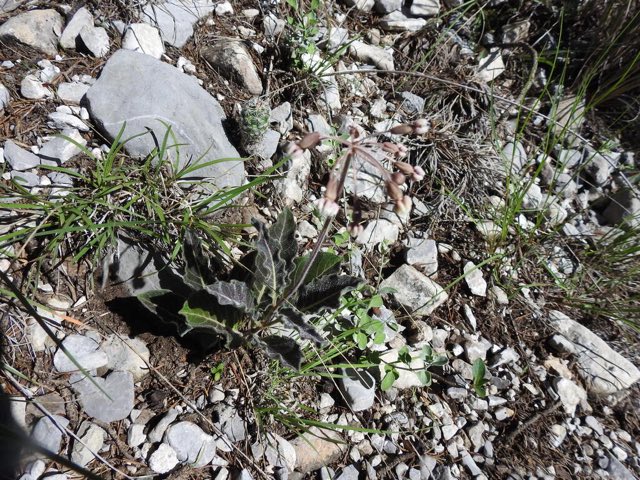
- Broad opposite stalkless leaves, ovate to oblong-lanceolate, with heart-shaped bases clasping a smooth waxy stem.
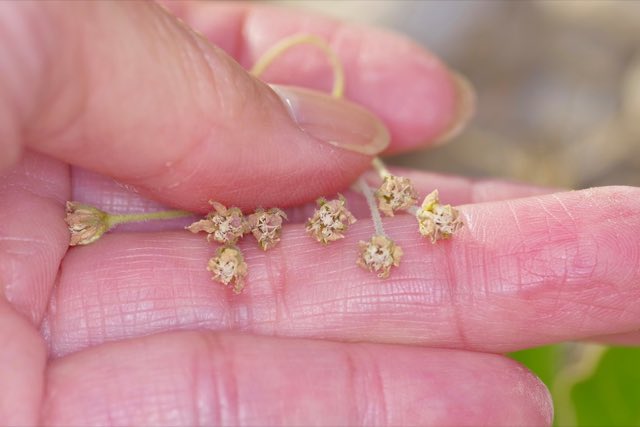
- Livid rose to purplish corolla with a cream gynostegium flushed rose or purple.
- Dry gravelly openings among scrub oak, on mountainsides and flats in the Trans-Pecos.
Unfamiliar words are in the glossary, and the identification key will narrow a plant down from what you can see.
Ecology and wildlife value
An early-spring flowerer in a region where most milkweeds wait for the summer monsoon, so it is available to the first monarchs moving north through west Texas. Little else about its ecology is documented.
Monarchs are not the only thing that will find it. Expect large milkweed bugs on ripening pods, oleander aphids on the stems, red milkweed beetles at the flowers and, in late summer, milkweed tussock moths. Everything that lives on milkweed.
Growing bear mountain milkweed
Not in cultivation and not commercially available.
Seed needs about 30 days of cold-moist stratification. Deep taproot, resents transplanting. See how to plant milkweed seed for the full method.
Cautions
A narrowly distributed species. Photograph and report rather than collect. More on milkweed toxicity.
Where bear mountain milkweed grows
Recorded in 1 state: Texas.
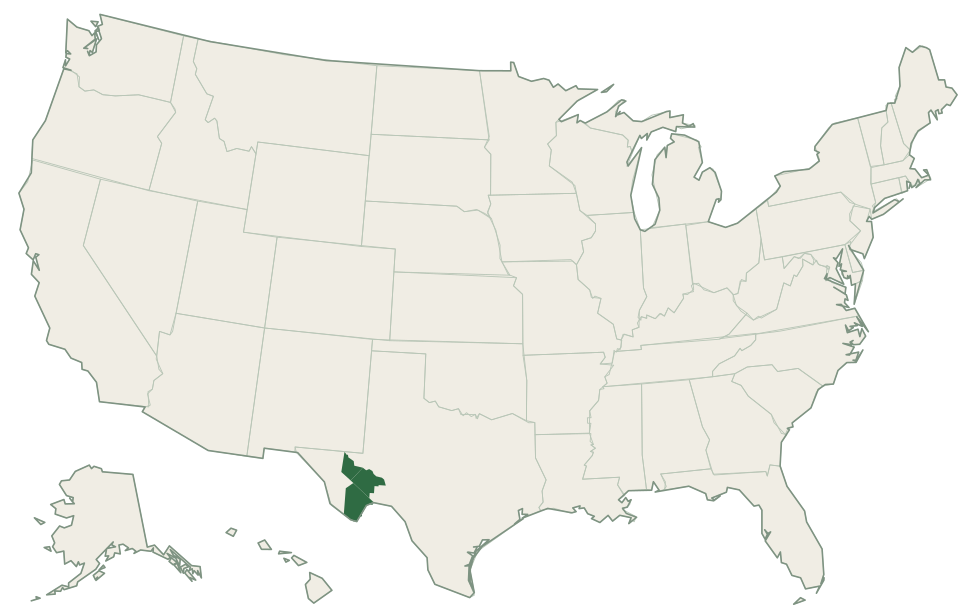
County records from USDA PLANTS, public domain. Cross-check against BONAP and your regional flora before making management decisions.
Frequently asked questions
Does Bear Mountain milkweed grow in New Mexico?
Almost certainly not. The USDA PLANTS database lists it for New Mexico, but Kew’s Plants of the World Online records it as having been reported there in error, and the Lady Bird Johnson Wildflower Center calls the single New Mexico report putative. Every confirmed United States population is in west Texas.
References and further reading
Names, ranges and conservation status here are drawn from the databases below. Where those disagree with a regional flora, trust the flora.
- Woodson, R. E. (1954). The North American species of Asclepias L.. Annals of the Missouri Botanical Garden 41(1): 1–211. The monograph the modern taxonomy of the genus still rests on. View
- Flora of North America Editorial Committee (eds.) (2026). Flora of North America North of Mexico. Oxford University Press, New York and Oxford. Accepted names, keys and descriptions for the North American flora. View
- Royal Botanic Gardens, Kew (2026). Plants of the World Online. Facilitated by the Royal Botanic Gardens, Kew. Nomenclature and global distribution, keyed to IPNI name identifiers. View
- Kartesz, J. T. (Biota of North America Program) (2026). North American Plant Atlas. BONAP, Chapel Hill, North Carolina. County-level distribution maps, the basis for the ranges generalized here. View
- USDA, NRCS (2026). The PLANTS Database. National Plant Data Team, Greensboro, North Carolina. State-level distribution, wetland status and nomenclature. View
- Agrawal, A. A. (2017). Monarchs and Milkweed: A Migrating Butterfly, a Poisonous Plant, and Their Remarkable Story of Coevolution. Princeton University Press. The standard general account of the milkweed and monarch relationship. View
Cite this page
This page is licensed CC BY 4.0. Quote it, adapt it and reuse it, including commercially, as long as you credit Milkweed USA and link back.
Milkweed USA. (2026). Bear Mountain Milkweed (Asclepias scaposa). Retrieved DATE, from https://milkweedusa.com/species/bear-mountain-milkweed/
"Bear Mountain Milkweed (Asclepias scaposa)." Milkweed USA, 2026, https://milkweedusa.com/species/bear-mountain-milkweed/. Accessed DATE.
Milkweed USA. "Bear Mountain Milkweed (Asclepias scaposa)." Last modified 2026-08-01. Accessed DATE. https://milkweedusa.com/species/bear-mountain-milkweed/.
@misc{milkweedusa_speciesbearmountainmilkweed,
  title  = {Bear Mountain Milkweed (Asclepias scaposa)},
  author = {{Milkweed USA}},
  year   = {2026},
  url    = {https://milkweedusa.com/species/bear-mountain-milkweed/},
  note   = {Accessed DATE}
}